When we read Deuteronomy, we meet Moses near the end of his life. He speaks to the people of Israel before they enter the Promised Land.
So, who wrote Deuteronomy? Jewish and Christian tradition names Moses as its main author. The Bible also says Moses wrote down the law. However, the book ends with an account of his death, which raises questions about who recorded its final words.
Bible Gateway
+2
This guide looks at what the Bible says. It also explains why some scholars have different views.
Who Wrote Deuteronomy According to the Bible?
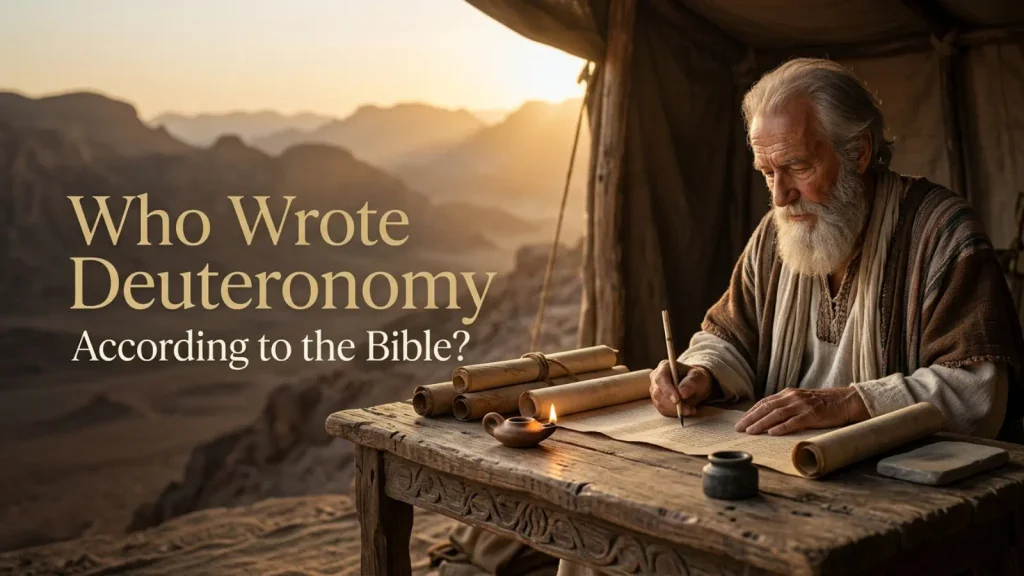
The Bible presents Moses as the main speaker and writer of Deuteronomy. The book begins by describing his words to the people of Israel.
Deuteronomy 1:1 introduces the words Moses spoke to Israel. These words came as the people prepared to enter a new land.
Moses was not speaking to a crowd of strangers. He was addressing the people who had traveled with him through the wilderness. He wanted them to remember God’s commands and live by them.
1. Deuteronomy 31:24 — Moses Writes the Law
Deuteronomy 31:24 describes Moses finishing his written record of the law. The passage directly connects Moses with the act of writing.
The next verses say he told the Levites where to keep the book. It was to serve as a witness against the people if they turned away from God’s commands (Deuteronomy 31:25–26).
Bible Gateway
+1
This passage is a key reason for the traditional view of Moses’ authorship. It does not, by itself, explain every stage in the making of the complete book.
2. Deuteronomy 31:9 — Moses Records the Teaching
Deuteronomy 31:9 says Moses wrote the law. He then gave it to the priests, the sons of Levi, and Israel’s elders.
These leaders had a duty to guide the people. The written law gave them a record of the commands they were to teach.
This verse supports the view that Moses put important parts of the law into writing. It also shows that the teaching was meant to continue after his death.
3. Deuteronomy 1:1 — Moses Speaks to Israel
The opening verse identifies Moses as the speaker. The book then records his words to Israel on the east side of the Jordan River.
Much of Deuteronomy takes the form of speeches. Moses recalls past events, repeats laws, and warns the people against disobedience.
The book is therefore closely tied to his leadership. Readers hear the message through Moses as he prepares Israel for life in the land.
Why Does Deuteronomy Record Moses’ Death?
One question often comes up when people study this book. If Moses wrote Deuteronomy, who wrote about his death?
The answer begins with the final chapter.
Deuteronomy 34:5–6 — The Death of Moses
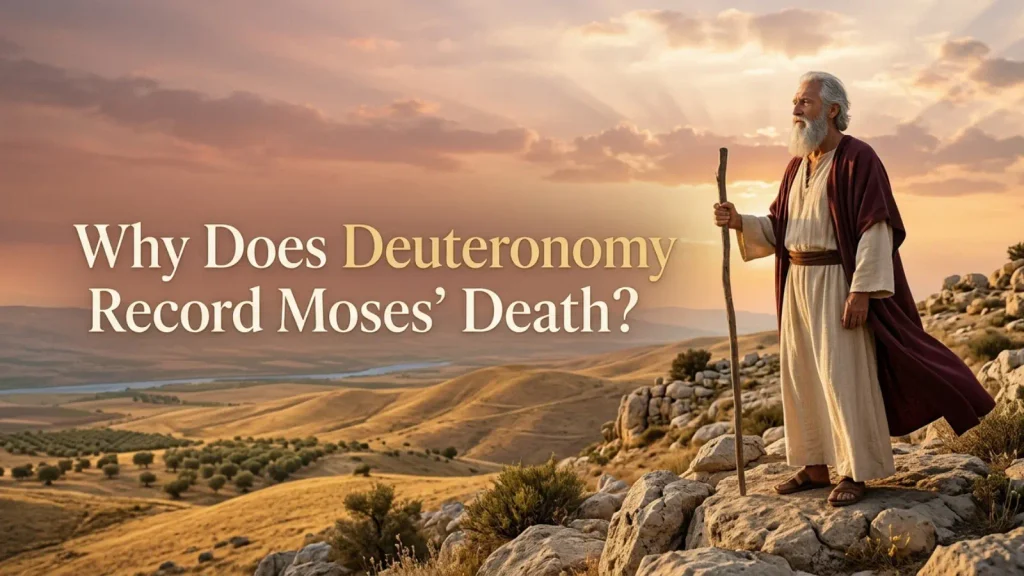
Deuteronomy 34 describes the final days of Moses and tells how he died in Moab. It also describes his burial and the people’s grief.
Moses could not have written an account of his own death as a completed event. For this reason, many readers believe another person added the final chapter.
However, the Bible does not name the person who wrote this account. Some people believe Joshua may have written this part, but the Bible does not say who wrote it.
This detail does not settle every question about the book’s history. It does explain why Moses’ role as author and the final form of Deuteronomy are often discussed separately.
Did Moses Write the Entire Book of Deuteronomy?
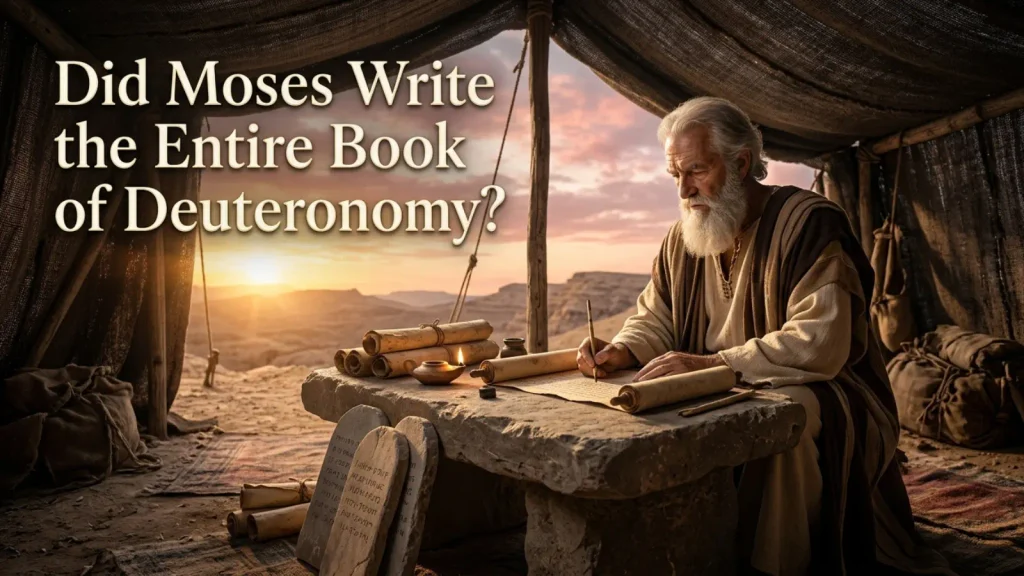
Traditional Jewish and Christian teaching holds that Moses wrote Deuteronomy. This view rests on the book’s own statements about his writing and on the long-standing tradition of Mosaic authorship.
Bible Gateway
+1
Many Christians understand Moses to be the main author, while allowing that a later writer may have added the account of his death. Some also allow for small changes made as the text was passed down.
Other scholars take a different view. They study the book’s language, structure, laws, and links to Israel’s later history.
These scholars often argue that Deuteronomy took shape over time. They connect parts of its history with the religious reforms under King Josiah in the seventh century BC. The exact process and date remain subjects of scholarly debate.
Oxford Academic
+2
It helps to separate two questions:
- Who is presented as the source of the teaching? The book repeatedly points to Moses.
- How did the book reach its final form? Traditional readers and modern scholars offer different explanations.
These different views help us understand the topic. However, we should remember that some ideas are opinions, not clear statements from the Bible.
What Is the Book of Deuteronomy About?
Deuteronomy is the fifth book of the Bible. It is also the last book of the first five books, known as the Pentateuch or Torah.
The book takes place as Israel prepares to enter the land promised to its ancestors. Moses looks back at the people’s journey and reminds them of God’s commands.
Its main themes include:
- Remembering God’s past care: Moses recalls events from Israel’s journey.
- Following God’s commands: He explains the laws Israel must obey.
- Loving God: The people are called to give God their full devotion.
- Teaching the next generation: Parents and leaders must pass on God’s commands.
- Choosing faithfulness: Moses warns the people about the results of their choices.
These themes explain why the book matters to Jewish and Christian readers. It connects Israel’s past with the duties facing the next generation.
Why Does Moses’ Role Matter to Readers Today?
Knowing who wrote Deuteronomy helps us read it in its original setting. Moses speaks to people facing a major change in their lives.
They are preparing to leave the wilderness and settle in a new land. They need to know the laws, remember their history, and understand their duties.
We can apply this setting when reading the book today.
- Read the setting first. Think about two things: Who is speaking, and who is hearing the message?
- Look for repeated commands. Notice what Moses tellsIsraelto remember.
- Read each law in context. Israel’s ancient laws were given to a particular people.
- Compare different views fairly. Separate what the text says from later explanations about its authorship.
For example, Deuteronomy 6:6–7 tells Israel to keep God’s words in mind and teach them to their children. In its original setting, this instruction concerns Israel’s duty to pass on God’s commands.
Parents today can reflect on how they teach their children about faith. They might read a short Bible passage together or talk about its meaning at home.
This approach respects the book’s original audience while helping readers consider its message.
Common Questions About Who Wrote Deuteronomy
1. Was Moses the author of Deuteronomy?
Moses is the traditional author. Deuteronomy 31:9 and 31:24 directly describe him writing the law. Some scholars believe the complete book developed through several stages.
2. Who wrote the last chapter of Deuteronomy?
The final chapter records Moses’ death. The Bible does not identify its writer. Some readers suggest Joshua, but this remains a proposal rather than a confirmed fact.
3. Is Deuteronomy one of the five books of Moses?
Yes. Deuteronomy is the fifth book of the Pentateuch, alongside Genesis, Exodus, Leviticus, and Numbers.
4. Why do some scholars question Mosaic authorship?
Some scholars point to the book’s language, structure, and links to later events in Israel’s history. They believe the book may have taken shape over time. Traditional readers continue to understand Moses as its main author.
5. When was Deuteronomy written?
The book places Moses’ speeches near the end of Israel’s wilderness journey. Scholars disagree about when the book’s different parts were written and when it reached its final form.
Who Wrote Deuteronomy? The Main Answer
The traditional answer to who wrote Deuteronomy is Moses. The book itself describes him writing down the law and teaching it to Israel.
The final chapter records his death, but it does not name the writer. This leaves room for discussion about later additions and the book’s full history.
Reading Deuteronomy with these details in mind helps us understand both its traditional authorship and the questions scholars continue to explore.

David Michael is dedicated to exploring the wisdom of the Holy Bible, offering meaningful Christian insights, prayers, and guidance for everyday life.
