When we read the Bible, we also meet the history of the Jewish people. Their sacred writings help explain their faith, worship, laws, and way of life.
Jewish religious writings include the Torah, the Tanakh, and other important texts. These writings have shaped Jewish belief and practice across many generations. They also help readers understand the background of the Old Testament.
What Are Jewish Religious Writings?
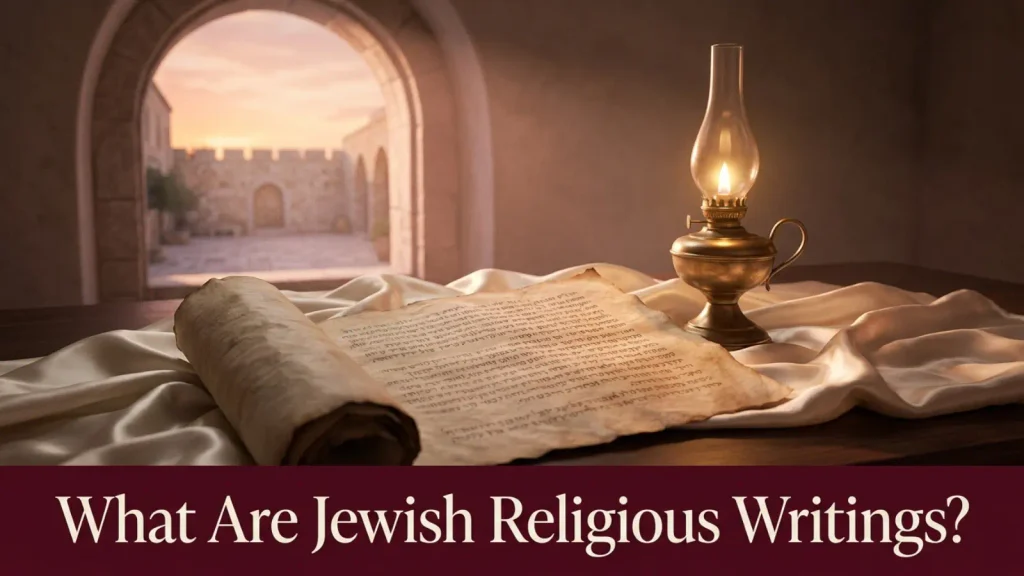
Jewish religious writings are texts that teach about God, worship, moral duties, and Jewish history. They include Scripture and later works that explain how people should understand and follow Jewish teachings.
The central collection is called the Tanakh. It contains three main parts: the Torah, the Nevi’im, and the Ketuvim. Christians call much of this collection the Old Testament, though the order, book divisions, and interpretation can differ.
Jewish tradition also values texts such as the Mishnah, the Talmud, and the Midrash. These works help explain Jewish law, discuss Scripture, and preserve teachings from Jewish religious life.
The Three Main Parts of the Tanakh
8
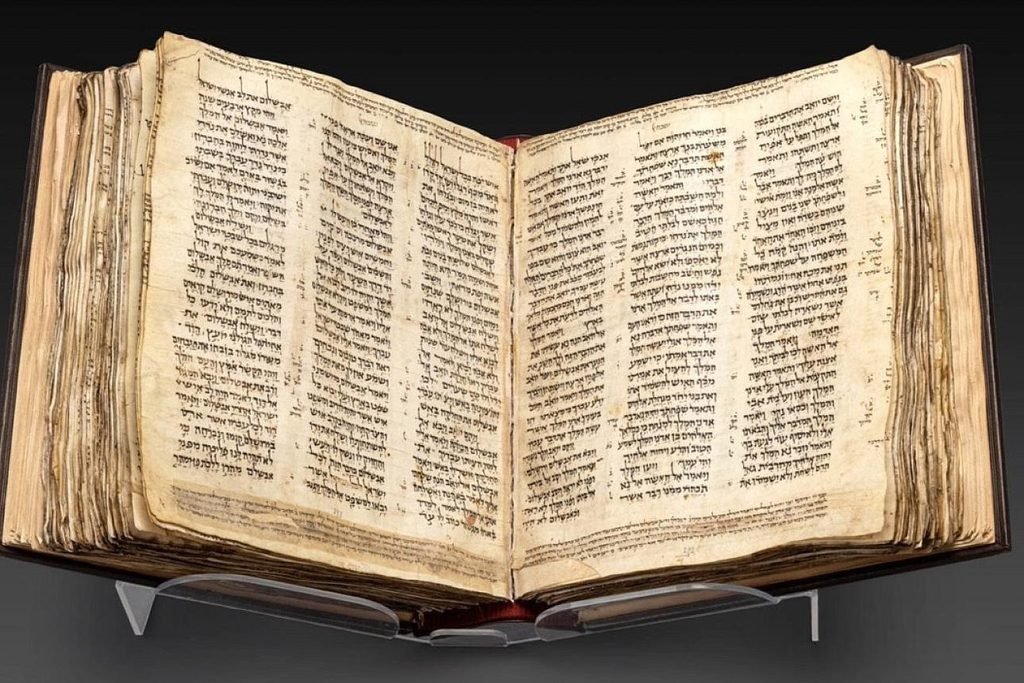
The Tanakh is the main collection of Jewish Scripture. Its name comes from the first letters of its three sections.
1. Torah: The Teaching and Law
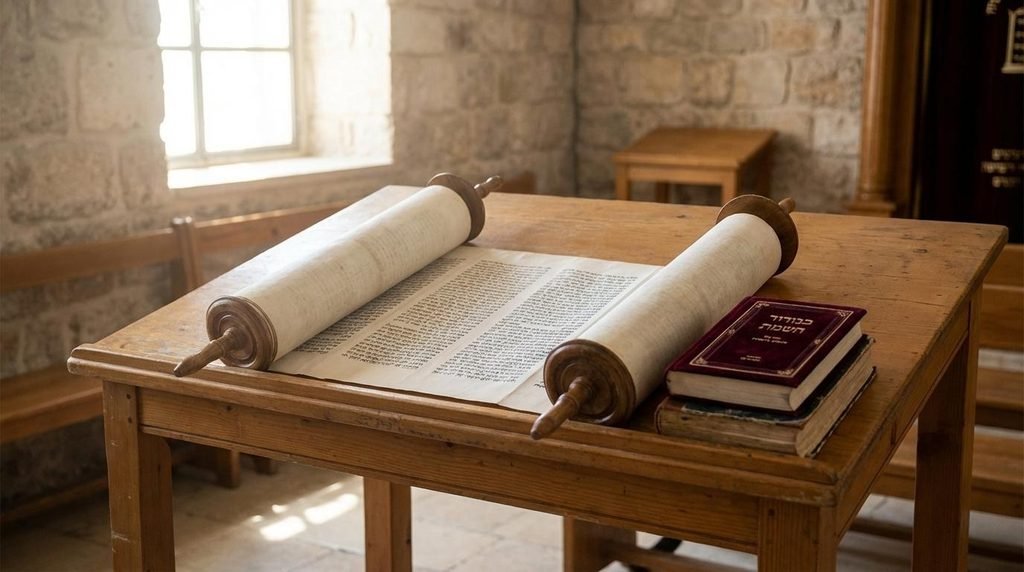
The Torah is the first part of the Tanakh. It contains five books: Genesis, Exodus, Leviticus, Numbers, and Deuteronomy.
These books tell of creation, the early families of Israel, and the story of Moses. They also describe God’s covenant with Israel and give laws for worship and daily life.
Genesis begins with the creation of the world. Exodus tells how the Israelites left slavery in Egypt. Leviticus gives many laws about worship and holiness. Numbers follows Israel’s journey through the wilderness. Deuteronomy presents Moses’ teaching before the people enter the land.
The Torah holds a central place in Jewish worship and study. Synagogues read passages from it during regular services.
Key point: The Torah gives the foundation for Jewish Scripture, law, and religious identity.
2. Nevi’im: The Prophets
The second part is called the Nevi’im, which means “Prophets.” It includes books about Israel’s history and messages from God’s prophets.
This section includes Joshua, Judges, Samuel, Kings, Isaiah, Jeremiah, Ezekiel, and the Twelve Minor Prophets. The Jewish arrangement differs in some ways from Christian Old Testament groupings.
These books describe leaders, kings, wars, and times of national trouble. They also record warnings against injustice and calls to return to God.
For example, the prophets often challenged rulers who harmed the poor. They also spoke against false worship and unfair treatment of others.
Key point: The Prophets record Israel’s history and call people to live faithfully and fairly.
3. Ketuvim: The Writings
The third section is called the Ketuvim, meaning “Writings.” It contains poetry, wisdom, stories, and other works.
Books in this section include Psalms, Proverbs, Job, Ruth, Esther, Daniel, Ezra-Nehemiah, and Chronicles. The exact grouping and order are not always the same across traditions.
Psalms contain songs and prayers. Proverbs share short teachings about wise choices. Job explores deep questions about suffering and justice. Ruth tells a story of family loyalty and kindness.
These books cover many parts of human life. They discuss praise, sadness, work, family, leadership, and the search for wisdom.
Key point: The Writings bring together prayers, stories, and lessons for many areas of life.
Jewish Religious Writings Beyond the Tanakh
Jewish religious study includes more than the Hebrew Bible. Later teachers wrote works that explain laws, discuss hard questions, and preserve different views.
4. The Mishnah
The Mishnah is a major collection of early rabbinic teachings. It was written down around the beginning of the third century CE.
It arranges teachings about Jewish law into six main sections. These cover prayer, festivals, family life, farming, and other areas.
The Mishnah helps readers see how Jewish teachers discussed daily religious duties. It also became a key source for later Jewish study.
Jewish Virtual Library
+1
Key point: The Mishnah records early rabbinic discussions about Jewish law and practice.
5. The Talmud
The Talmud is one of the best-known works in Jewish religious tradition. It includes the Mishnah and the Gemara, a collection of later rabbinic discussions about it.
There are two main versions: the Babylonian Talmud and the Jerusalem Talmud. They developed in different Jewish learning communities.
The Talmud explores questions about law, ethics, prayer, and daily choices. It often records different opinions rather than giving one short answer. Readers study these discussions to understand how Jewish teachers reasoned about religious duties.
My Jewish Learning
+1
Key point: The Talmud preserves wide-ranging rabbinic debate and teaching.
6. The Midrash
Midrash refers to Jewish methods of interpreting Scripture. It also refers to collections of explanations, stories, and teachings based on biblical passages.
A Midrash may explore a word, a story, or a question left open by the text. Some works focus on law. Others develop moral lessons or stories connected with Scripture.
Midrash helps readers understand how Jewish teachers have studied biblical words across time. Different collections may offer different explanations of the same passage.
Key point: Midrash explores the meaning of Scripture through interpretation and teaching.
What Do Jewish Sacred Texts Teach?
These writings cover many subjects. Their main themes include worship, moral choices, community, and the study of God’s commands.
- Belief in one God: The Torah teaches Israel to worship the one God (Deuteronomy 6:4).
- Family teaching: Deuteronomy 6:6–7 tells parents to teach God’s commands to their children.
- Justice and kindness: The Prophets often challenge wrongdoing and unfair treatment.
- Prayer and praise: Psalms contain prayers for joy, sorrow, thanks, and worship.
- Wise choices: Proverbs share short teachings about speech, work, and conduct.
These themes appear across different books and genres. Each text has its own setting and purpose, so readers should consider its context.
How Are Jewish Religious Writings Different From the Christian Bible?
The Tanakh and the Christian Old Testament share many of the same ancient books. However, they are not arranged in exactly the same way.
The Jewish Tanakh has 24 books in its traditional count. Many Protestant Bibles divide much of the same material into 39 Old Testament books. The difference mainly comes from how books are grouped and counted.
My Jewish Learning
+1
Christian Bibles may also include additional books, depending on the church tradition. Catholic and Orthodox Bibles include books that are not part of the Jewish Tanakh.
Christians and Jews may also interpret shared passages differently. Jewish religious writings should therefore be understood within their own Jewish history and traditions.
How to Begin Reading Jewish Religious Writings
You do not need to read every text at once. Start with a clear goal and choose a suitable book.
- Begin with Genesis. Read the opening stories about creation and the early families of Israel.
- Explore Psalms. Notice its different kinds of prayers and songs.
- Read Proverbs. Look at its short teachings about daily conduct.
- Learn about the Mishnah. Find an introduction to its six sections and purpose.
- Study the Talmud with a guide. Its debates can be difficult without background information.
Use a reliable translation and check the notes when a passage seems unclear. A good introduction can also explain unfamiliar Hebrew terms and Jewish customs.
Common Questions About Jewish Religious Writings
What is the most important Jewish religious text?
The Tanakh is the central collection of Jewish Scripture. The Torah, its first five books, holds a special place in Jewish religious life.
Are the Torah and the Tanakh the same?
No. The Torah contains five books. The Tanakh includes the Torah, the Prophets, and the Writings.
Is the Talmud part of the Hebrew Bible?
No. The Talmud is a later collection of rabbinic teachings and discussions. It helps explain Jewish law and religious practice.
Do Jewish people read the Old Testament?
Jewish people read the Tanakh, also called the Hebrew Bible. Christians often call much of this collection the Old Testament.
What language were Jewish sacred texts written in?
Much of the Tanakh was written in Hebrew. Some passages, especially in Daniel and Ezra, are in Aramaic. Later Jewish religious works use Hebrew, Aramaic, and other languages.
Why Jewish Religious Writings Still Matter
Jewish religious writings preserve centuries of Scripture, teaching, and discussion. The Tanakh provides the foundation, while the Mishnah, Talmud, and Midrash show how Jewish teachers explored its meaning.
Learning about these texts helps readers understand Jewish history and faith. It also gives useful background for studying the Old Testament and its place in Christian Scripture.

Mary Elizabeth writes heartfelt Christian content focused on faith, prayer, hope, and the teachings of Jesus Christ to encourage and inspire believers.
